How to Choose a Lymphatic Drainage Supplement

The lymphatic supplement shelf has grown fast, and quality varies enormously. Here's a checklist you can run through in about two minutes per product.
1. Are the ingredient amounts actually listed?
Every active should have a number next to it. "Proprietary Lymph Blend, 450 mg" tells you nothing — that could be 445 mg of filler and 5 mg of everything else. Full disclosure is the single strongest quality signal on a label.
2. Are the botanicals ones with genuine traditional use?
In the Western herbal lymphatic tradition, the recurring names are cleavers (Galium aparine), red clover, prickly ash bark, stillingia root, calendula, echinacea, and burdock. Their modern clinical evidence is thin — that's true of the whole category — but traditional use is at least a real basis. A formula built on names nobody uses in this context is usually built for marketing.
3. Is the plant part and extract ratio specified?
"Cleavers" is vague. "Cleavers aerial parts, 4:1 extract" is specific. Root, leaf, and bark differ chemically, and extract strength changes what a milligram means.
4. Is it a supportive formula or a hidden diuretic?
Check for dandelion leaf, juniper, uva ursi, buchu, and caffeine high in the ingredient list. Nothing wrong with them per se, but a strong diuretic gives you fast water loss that returns just as fast — and can disturb electrolytes. If a product's whole promise is "drop 5 lbs in 3 days," it's a diuretic in a wellness wrapper.
5. Format: does it fit your actual life?
- Liquid drops — flexible dosing, fast to take, no pills to swallow. Taste is the trade-off.
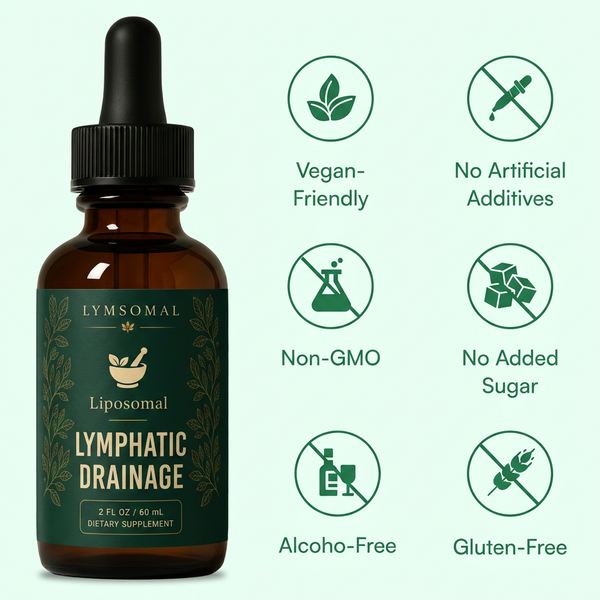
- Liposomal liquids — a phospholipid delivery format used to protect and improve uptake of poorly absorbed compounds. A reasonable formulation choice; absorption gains vary by compound, so treat marketing multipliers with scepticism.
- Capsules — tasteless and portable, but fixed dose and slower.
- Powders and gummies — check for added sugar, and note that gummies often carry lower actives per serving.
6. Is there third-party testing?
Look for a certificate of analysis, or testing for heavy metals, microbes, and pesticides. Botanicals concentrate what's in their soil, so this matters more for herbs than for a synthetic vitamin. Bonus points for cGMP manufacturing and a named facility.
7. What's the real cost per day?
Divide price by servings, not by bottles. A 60 ml bottle at $40 with a 1 ml serving is roughly $0.67 a day. Then check whether the bundle discount is genuine or just anchored against an inflated single-bottle price.
8. Does the return policy match the timeline?
Botanicals are cumulative — six to eight weeks is the honest window for judging one. A 14-day return window is too short to evaluate the product it's attached to. A 60 day or longer guarantee signals a company that expects you to still be there in month two.
9. How does the brand talk about evidence?
This is the tell. Good brands distinguish "traditionally used for" from "clinically proven to." They name what isn't known. They tell you to see a doctor for persistent swelling. Brands that blur those lines are making a choice about how much they respect you.
Three claims that should end the evaluation
- "Detoxifies and flushes toxins from your lymph." Unnamed, unmeasurable, and not how the system works.
- "Treats or cures lymphedema." Lymphedema is a medical condition requiring specialist care. This claim is both false and unsafe.
- "Lose 10 lbs of lymph weight in a week." Fluid, not fat, and it comes straight back.
A two-minute version
Amounts disclosed. Recognisable traditional botanicals. Plant part and extract ratio specified. No aggressive diuretics. Third-party tested. Cost per day you can sustain for two months. A guarantee that outlasts the evaluation window. Honest language about evidence.
If a product clears those eight, it's a reasonable candidate. Then judge it on how you feel after six weeks — not after six days.

Run the checklist on us
Traditional lymphatic botanicals, liposomal delivery, and language we're willing to defend. See the full ingredient breakdown on the product page.
View Lymsomal DropsThis article is for general education only and is not medical advice. Lymsomal is a dietary supplement and is not intended to diagnose, treat, cure, or prevent any disease.