How to Reduce Bloating: A Practical Guide

Almost every bloating guide fails for the same reason: it treats bloating as one condition. It isn't. There are two, they feel different, and the fixes barely overlap.
Thirty-second self-diagnosis
Type A — digestive (gas and gut)
Pressure and distension in your abdomen. Worse after eating, better by morning. Rumbling, burping, wind. Your belly looks bigger; your rings still fit.
Type B — fluid (puffiness)
Tight and heavy rather than gassy. Shows in your face, fingers, ankles and lower legs, not just your belly. Worse after salty food, alcohol, flights, heat, or at certain points in your cycle. Sock lines that linger; rings that won't turn.
Many people have both. Work on the dominant one first.
Plan A: digestive bloating
Do first
- Eat slower. Most swallowed air comes from rushing, talking while eating, straws, and fizzy drinks. Unglamorous and effective.
- Smaller, more frequent meals instead of one large one.
- Walk 10–15 minutes after eating. Speeds gastric emptying measurably.
- Cut carbonation and sugar alcohols (sorbitol, xylitol, mannitol — sugar-free gum and "diet" products).
Then investigate
- Keep a two-week food and symptom log. Patterns show up faster than you'd expect — dairy, wheat, onion and garlic, beans, and cruciferous vegetables are the usual suspects.
- Trial a specific enzyme if you find a match: lactase for dairy, alpha-galactosidase for beans and cruciferous veg.
- Consider a low-FODMAP trial with a dietitian — better evidence than most supplements, but not a diet to run indefinitely alone.
- Enteric-coated peppermint oil has reasonable evidence for IBS-type bloating.
Get checked if
You have unintentional weight loss, blood in stool, persistent vomiting, difficulty swallowing, fever, night-time symptoms that wake you, a family history of bowel disease, or new bloating after 50. That's a GP visit, not a supplement.
Plan B: fluid bloating and puffiness
Do first
- Drink more water, not less. Dehydration makes your body hold sodium and fluid. The instinct to restrict is backwards.
- Move every hour. Your lymphatic system has no pump — muscle contraction is the pump. Sixty seconds of calf raises or a lap of the office. Highest-impact item on this list.
- Fix the sodium-potassium ratio. Not just less salt: more greens, avocado, beans, potatoes, tomatoes, citrus. Most sodium comes from packaged and restaurant food, not the shaker.
- Enough protein. Low blood protein lets fluid leak into tissue more easily.
Then add
- Elevate your legs 15–20 minutes above heart level in the evening.
- Compression socks if you sit, stand, or travel for work. Cheap, well-evidenced.
- Protect sleep. Short sleep reliably increases next-day retention.
- Deep breathing — ten slow belly breaths, a few times daily, moving lymph through the thoracic duct.
- Cool rinse and gentle upward strokes at the end of a shower.
Optional supplements, ranked by evidence
- Magnesium — the most credible option, mainly for cyclical and premenstrual retention.
- Lymphatic botanicals (cleavers, red clover, prickly ash bark, stillingia root) — long traditional use, limited modern research; positioned around supporting flow rather than forcing output.
- Dandelion leaf — mild traditional diuretic; treats the symptom, not the cause.
Skip
Strong diuretic "detox" blends and laxative teas. Fast water loss that returns just as fast, with electrolyte risk attached.
A 7-day reset that works for both types
- Days 1–2: water on waking, hourly movement, no packaged snacks, no carbonation.
- Days 3–4: add a 10-minute walk after each meal and legs elevated before bed.
- Days 5–6: two potassium-rich servings per meal; keep a symptom log.
- Day 7: review the log. Which type do you actually have? Commit to that plan for a month.
The bottom line
Gas is a digestion problem; puffiness is a drainage problem. Diagnose first, then pick the plan. Almost everyone who says "nothing works for my bloating" has been running Plan A against a Type B problem, or the reverse.

If yours is Type B
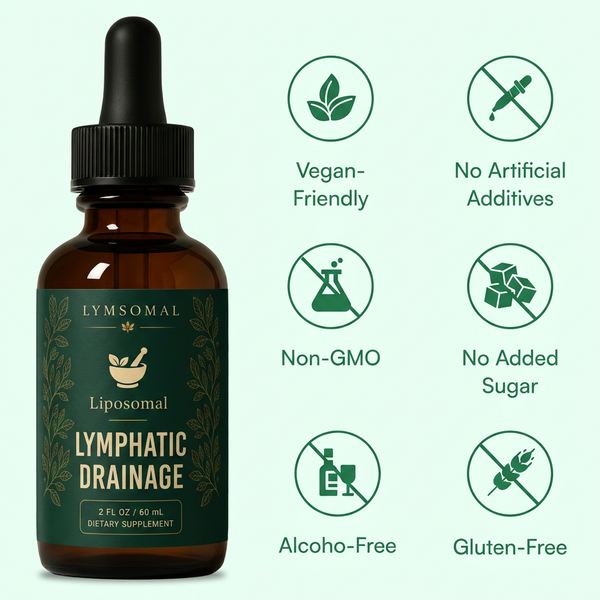
Lymsomal is built for the fluid-and-drainage side — not a diuretic, not a digestive enzyme.
Shop Lymsomal DropsThis article is for general education only and is not medical advice. Lymsomal is a dietary supplement and is not intended to diagnose, treat, cure, or prevent any disease.